Buy Follistatin 315 Peptide – Myostatin Research Protein
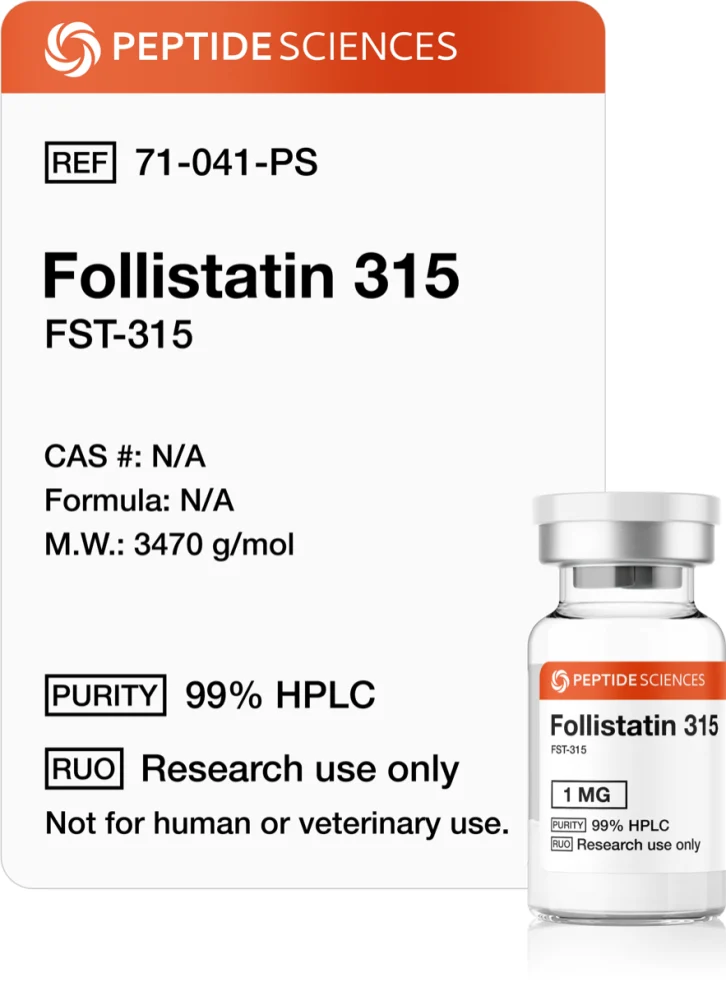
Follistatin 315 peptide (FST-315) is a recombinant protein widely studied in muscle biology and growth factor research. Scientists focus on this 315–amino acid isoform because it circulates systemically and demonstrates strong binding affinity to myostatin and activin proteins. Its structure and biological activity make it valuable in laboratory investigations involving muscle regulation and cellular signaling.
What Makes Follistatin 315 Unique?
Follistatin naturally binds to members of the transforming growth factor-beta (TGF-β) superfamily, particularly myostatin and activin. Myostatin functions as a negative regulator of muscle growth. When researchers inhibit myostatin activity, they can study pathways involved in muscle hypertrophy and tissue repair.
The 315–amino acid version differs from other isoforms due to its extended C-terminal sequence. This structure promotes circulation in extracellular fluids, making it especially relevant in systemic research models.
Myostatin Inhibition Research
Scientists use Follistatin 315 to examine the biological effects of myostatin suppression. By binding to myostatin, FST-315 reduces its signaling activity. This mechanism allows researchers to explore muscle fiber growth, satellite cell activation, and protein synthesis pathways.
Activin Pathway Regulation
Follistatin also binds to activin proteins, which influence inflammation, reproductive biology, and cellular differentiation. Through this interaction, researchers study regulatory pathways involved in tissue remodeling and regenerative processes.
Muscle and Regenerative Research Applications
Research models frequently investigate Follistatin 315 in studies related to:
-
Skeletal muscle growth signaling
-
Muscle recovery mechanisms
-
Tissue regeneration pathways
-
Growth factor interaction studies
-
Metabolic signaling research
Its systemic activity and strong receptor-binding properties make it suitable for advanced experimental protocols.
Product Specifications
-
Form: Lyophilized recombinant protein
-
Sequence Length: 315 amino acids
-
Purity: ≥95–98% (SDS-PAGE & HPLC tested)
-
Grade: Research grade
-
Storage: -20°C long term, 2–8°C short term
-
Intended Use: Laboratory research only
Manufacturers produce each batch under controlled conditions to preserve protein stability and structural integrity.
Certificate of Analysis (COA)
| Test Parameter | Specification | Result | Test Method |
|---|---|---|---|
| Appearance | White to off-white lyophilized powder | Complies | Visual |
| Protein Identity | Conforms to reference standard | Confirmed | Mass Spectrometry |
| Amino Acid Sequence | 315 amino acids | Verified | Sequence Analysis |
| Molecular Weight | Conforms to theoretical value | Conforms | MS Analysis |
| Purity (HPLC) | ≥ 95.0% | 97.42% | HPLC |
| Purity (SDS-PAGE) | ≥ 95.0% | 96.88% | SDS-PAGE |
| Endotoxin Level | ≤ 1.0 EU/µg | < 0.25 EU/µg | LAL Test |
| Residual Solvents | Within ICH limits | Complies | GC |
| Heavy Metals | ≤ 10 ppm | < 5 ppm | ICP-MS |
| Microbial Limits | Meets USP standards | Pass | Microbial Test |
| Water Content | ≤ 8.0% | 4.9% | Karl Fischer |
Conclusion
Important Notice
Follistatin 315 peptide is strictly intended for laboratory research. Regulatory authorities have not approved it for human consumption or medical use. Qualified professionals must handle this protein in licensed research environments only.


Reviews
There are no reviews yet.