
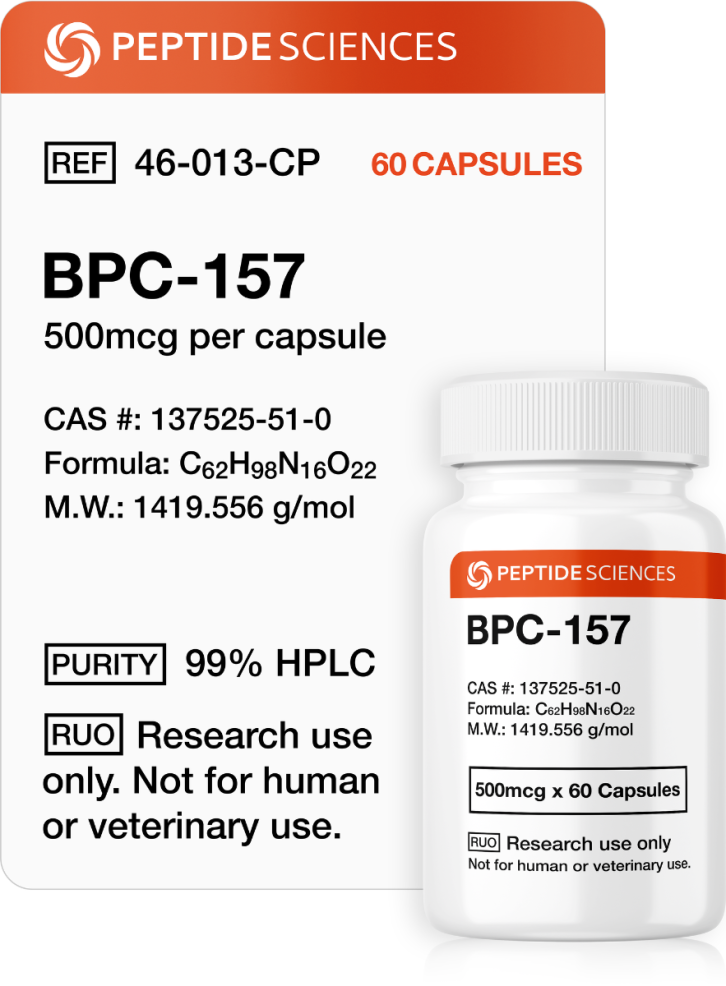
BPC 157 500mcg (60 Capsules)
$120.00
BPC-157 capsules contain a high-purity synthetic pentadecapeptide widely studied for tissue repair, angiogenesis, and cellular signaling research. Supplied in pre-measured capsule format using ≥98% HPLC-tested raw material. Intended strictly for laboratory research use only.
Buy BPC-157 Capsules – Advanced Tissue Repair Research Compound
For Research Purposes Only
What Are BPC-157 Capsules?
BPC-157 capsules contain a stabilized form of the synthetic pentadecapeptide BPC-157, a compound widely studied in laboratory environments for its interaction with tissue repair signaling pathways, angiogenesis mechanisms, and cellular protection models. Researchers frequently select BPC-157 for experimental designs focused on connective tissue regulation, gastrointestinal pathway research, and inflammatory signaling analysis.
The capsule format provides standardized measurement, allowing research teams to maintain consistency across structured laboratory trials. This format supports controlled study designs where precise quantity handling plays a critical role.
BPC-157 capsules are intended strictly for laboratory research use only. Not for human consumption.
Research Applications & Investigational Benefits
Tissue Repair Signaling Research
Scientists often use BPC-157 in models examining cellular migration, fibroblast activity, and extracellular matrix coordination. These research systems help investigators analyze mechanisms involved in tendon, ligament, and muscle-related signaling pathways.
By including BPC-157 in structured laboratory studies, researchers can evaluate its interaction with growth factor signaling networks and regenerative pathway coordination.
Angiogenesis & Vascular Studies
BPC-157 appears in experimental models focused on vascular endothelial signaling and angiogenic activity. Researchers study how peptide interaction may influence blood vessel–related cellular communication pathways.
These investigations contribute to a broader understanding of tissue oxygenation and vascular remodeling research mechanisms.
Gastrointestinal Research Models
Laboratories frequently explore BPC-157 in gastrointestinal pathway studies. Scientists analyze mucosal barrier signaling, cellular protection mechanisms, and regulatory coordination in controlled experimental environments.
This area of research continues to make BPC-157 one of the more widely examined peptides in digestive-system-related laboratory studies.
Inflammatory Pathway Investigation
Researchers also include BPC-157 in models focused on cytokine signaling and inflammatory marker regulation. These studies allow scientists to examine peptide interaction with immune-modulated cellular responses.
Composition & Technical Specifications
-
Compound Name: BPC-157 (Body Protection Compound-157)
-
Amino Acid Length: 15 amino acids
-
Molecular Formula: C62H98N16O22
-
Molecular Weight: ~1419.5 g/mol
-
Form: Encapsulated research compound
-
Raw Peptide Purity (HPLC): ≥98% typical
-
Capsule Format: Pre-measured laboratory unit
Capsules contain research-grade BPC-157 prepared under controlled manufacturing conditions.
Quality Assurance & Testing
Each batch of raw peptide material may undergo:
-
High-Performance Liquid Chromatography (HPLC) purity verification
-
Mass spectrometry molecular confirmation
-
Identity testing
-
Physical inspection
Batch-specific Certificates of Analysis (COAs) may be available upon request.
Storage Guidelines
Store in a cool, dry environment. Protect from heat, moisture, and direct light. Keep the container tightly sealed when not in use.
Important Notice
BPC-157 capsules are supplied strictly for laboratory research purposes only. They are not approved for human consumption, clinical application, or therapeutic use.
Certificate of Analysis (COA)
Product: BPC-157 Capsules
Raw Peptide Purity: ≥98%
Grade: Research Use Only
Analytical Results
| Test | Method | Specification | Result |
|---|---|---|---|
| Appearance | Visual | White powder (raw material) | Complies |
| Identification | Mass Spectrometry | Conforms to reference | Confirmed |
| Purity | HPLC | ≥98.0% | 99.0% |
| Molecular Weight | MS | ~1419.5 g/mol | Confirmed |
| Moisture Content | Karl Fischer | ≤8.0% | 3.2% |
| Microbial Limits | Plate Count | Within limits | Complies |
Be the first to review “BPC 157 500mcg (60 Capsules)”
Related products
Reviews
There are no reviews yet.