
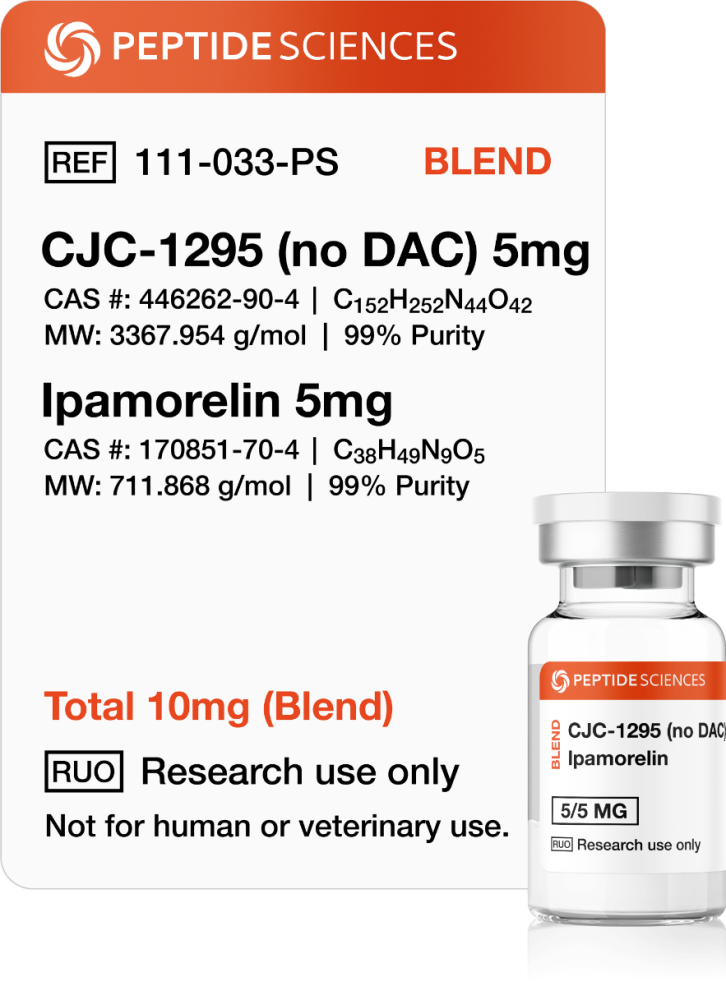
CJC-1295 (no DAC), Ipamorelin 10mg (Blend)

Price range: $80.00 through $150.00
CJC-1295 and Ipamorelin is a research peptide stack commonly studied for growth hormone pathway signaling. Researchers often explore this combination for recovery, sleep-related mechanisms, body composition pathways, and performance-focused research models.
Buy CJC-1295 + Ipamorelin Peptide Stack for Research
CJC-1295 and Ipamorelin is a popular peptide research stack used in laboratory studies focused on growth hormone signaling and recovery-related pathways. Researchers often pair these peptides because they support complementary research mechanisms. As a result, this stack has become widely recognized in performance, recovery, and metabolic research programs.
CJC-1295 is commonly researched for its relationship with growth hormone releasing hormone (GHRH) signaling pathways. Researchers often explore how CJC-1295 may influence growth hormone pulse activity and IGF-1 related research mechanisms. In addition, research teams include CJC-1295 in studies involving body composition signaling, cellular recovery pathways, and long-term metabolic research models.
Ipamorelin is widely researched as a growth hormone secretagogue peptide (GHS). Researchers commonly explore Ipamorelin because it supports growth hormone signaling pathways while maintaining a more targeted research profile compared to earlier peptides in the same category. Therefore, Ipamorelin appears frequently in research involving recovery signaling, sleep-related mechanisms, and muscle response models.
Why do researchers stack CJC-1295 with Ipamorelin?
When researchers combine CJC-1295 and Ipamorelin, they can study both GHRH and GHS pathways in the same research stack. CJC-1295 supports growth hormone release signaling through GHRH pathways. Meanwhile, Ipamorelin supports growth hormone secretion through GHS-related mechanisms. Because these pathways work together, the stack supports more complete research into growth hormone regulation.
Researchers also explore this peptide stack in studies involving recovery, performance, and aging-related mechanisms. For example, research teams often investigate how growth hormone pathways may influence tissue repair signaling and inflammation response models. In addition, researchers study growth hormone signaling for its potential relationship with sleep quality mechanisms and overall recovery pathways.
This research stack supports consistent lab work and repeatable study design. It also fits well into research programs that compare growth hormone pathway peptides across different models. Because both peptides remain popular in peptide science, researchers can also compare results across a wide range of existing studies.
Key Benefits
-
Supports research into growth hormone signaling pathways
-
Combines GHRH and GHS research mechanisms in one stack
-
Commonly studied for recovery and performance-related pathways
-
Relevant for sleep, body composition, and aging research models
-
Ideal for controlled lab trials and repeated research testing
CJC-1295 and Ipamorelin is intended strictly for research purposes only and is not for human consumption.
CJC-1295 (No DAC) + Ipamorelin 10mg Blend – Composition & Specifications
Product Overview
CJC-1295 (No DAC) and Ipamorelin are synthetic research peptides commonly studied in laboratory models involving growth hormone–related signaling pathways and receptor activity research. When combined into a blend, researchers can examine complementary pathway interactions in structured experimental designs.
CJC-1295 (No DAC) is a modified GHRH analogue studied for pulse-based signaling research due to its shorter activity window compared to DAC versions. Ipamorelin is a selective growth hormone secretagogue commonly researched for its interaction with ghrelin receptor (GHSR) pathways.
This blend supports controlled research applications involving endocrine axis signaling, receptor studies, and comparative peptide analysis.
Intended strictly for research purposes only. Not for human consumption.
Composition
| Component | Specification |
|---|---|
| Product Name | CJC-1295 (No DAC) + Ipamorelin Blend |
| Peptide Type | Synthetic peptide blend |
| CJC-1295 Type | Modified GHRH analogue (No DAC) |
| Ipamorelin Type | Ghrelin receptor agonist |
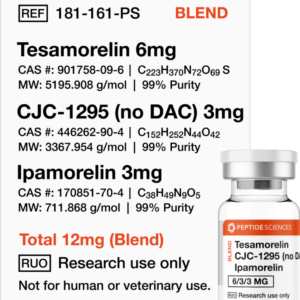
| Total Content | 10mg combined blend (example format) |
| Typical Ratio | 5mg CJC-1295 (No DAC) + 5mg Ipamorelin (varies by batch) |
| Appearance | White to off-white lyophilized powder |
| Solubility | Soluble in sterile water (research use) |
| Purity (Each Peptide) | ≥ 98% (HPLC) typical |
| Presentation | Sterile multi-peptide vial |
Storage & Handling
-
Long-Term Storage: -20°C recommended
-
Short-Term Storage: 2°C–8°C
-
After Reconstitution: Store refrigerated per laboratory protocol
-
Avoid: Repeated freeze–thaw cycles
-
Protect From: Light, moisture, and excessive heat
Proper storage conditions help maintain peptide integrity and analytical consistency.
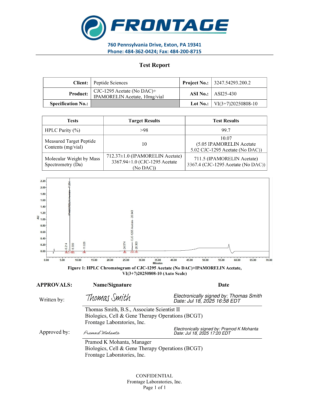
Certificate of Analysis
Analytical Results
| Test Item | Acceptance Criteria | Typical Result |
|---|---|---|
| Appearance | White/off-white lyophilized powder | Complies |
| Identification – CJC-1295 | Confirmed by HPLC / MS | Complies |
| Identification – Ipamorelin | Confirmed by HPLC / MS | Complies |
| Purity – CJC-1295 | ≥ 98.0% | 98.0% – 99.9% |
| Purity – Ipamorelin | ≥ 98.0% | 98.0% – 99.9% |
| Total Peptide Content | Within in-house specification | Complies |
| Water Content | ≤ 8.0% | Complies |
| Residual Solvents | Within limits | Complies |
| Endotoxin (if tested) | ≤ 10 EU/mg | Complies |
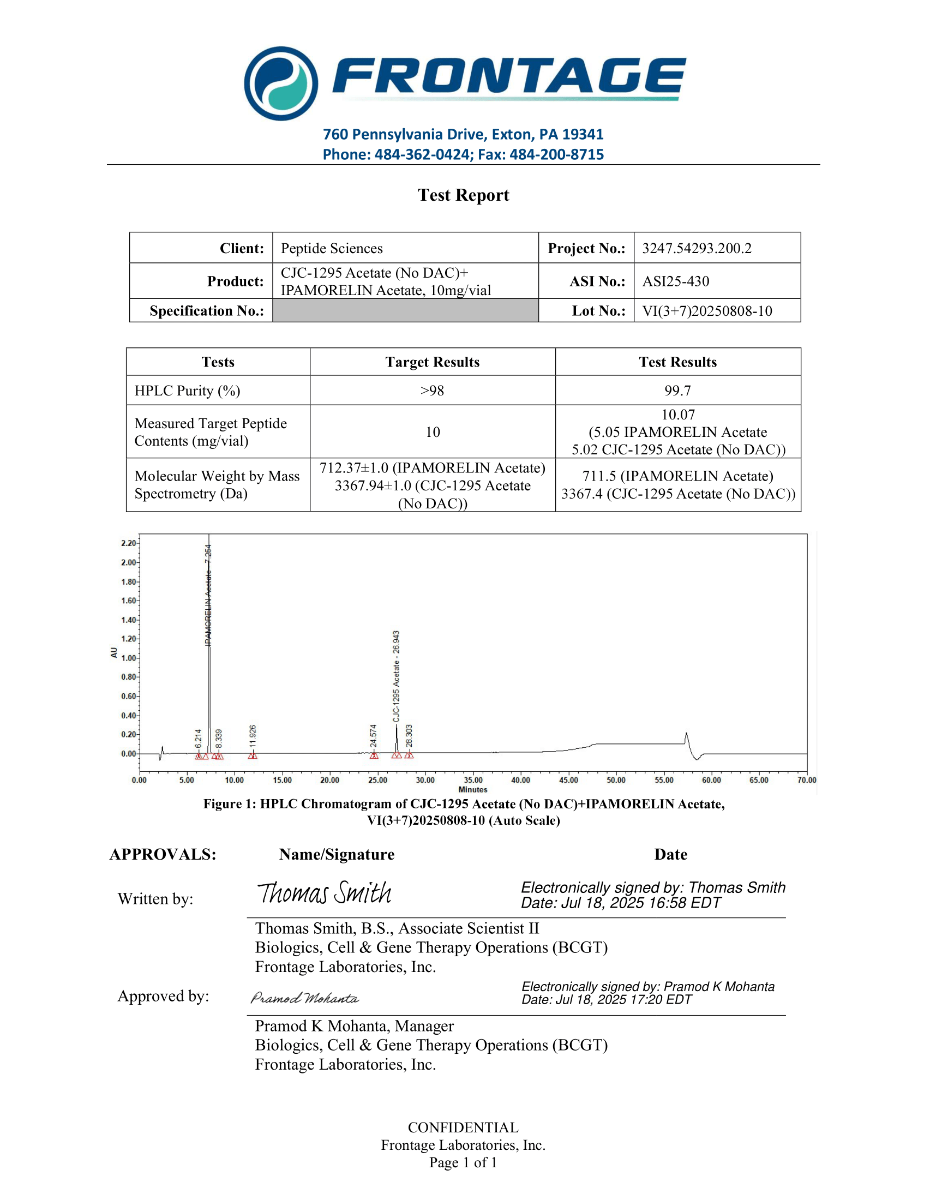
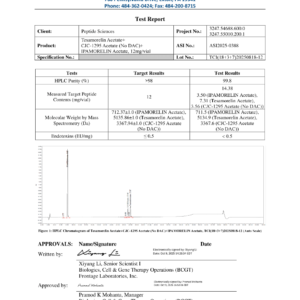
Representative HPLC Profile
-
Method: High Performance Liquid Chromatography
-
Main Peaks: CJC-1295 (No DAC) and Ipamorelin
-
Purity (Area % per peptide): ≥ 98%
-
Retention Time: Method dependent
Batch-specific chromatograms available upon request.
COA Conclusion
All tested parameters comply with established in-house research specifications.
3RD PARTY TESTING
| Quantity | 10mg, 20mg |
|---|
Be the first to review “CJC-1295 (no DAC), Ipamorelin 10mg (Blend)”
Related products
GROWTH HORMONE RELEASING HORMONE
HEALING PEPTIDES
Reviews
There are no reviews yet.